Showing posts with label CoP 3. Show all posts

Monday, 7 December 2015

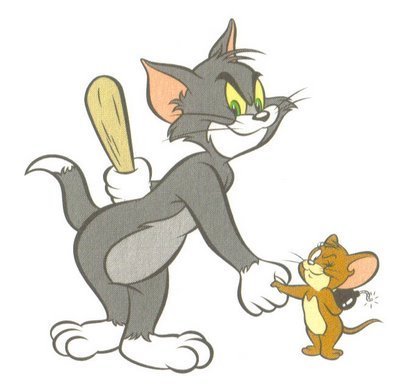
Tom & Jerry Movies and Reboots: Tom and Jerry the Movie

Tom and Jerry are the most famous comedic duo of all time, having a strong and faithful following to the point in which they are constantly being rebooted in multiple ways. None of which have managed to live up to the original series of short films by Bill Hanna and Joseph Barbera. I'm going to explain why these shorts worked by comparing them to Tom & Jerry the Movie (1993) and the short-lived The Tom & Jerry Show (1975).


Tom & Jerry the Movie, tried something new with the characters, at an attempt to fit the characters in a feature-length narrative. They were given full dialogue, musical numbers, a more complicated story, and even a less dysfunctional dynamic. This backfires, unfortunately, as it completely misses what was entirely the point of the original shorts, as well as having a bizarrely complex story surrounding an orphan child who is somehow worth a lot of money to her caretakers. On top of that, there were surprisingly a lot of antagonists in this film, too many in fact. The story simply felt too convoluted, and just as as a Tom & Jerry story. There actually was not a lot of focus on the two main characters either, which is ironic considering they were given voices throughout the film, so it would surely be more logical that they would be the main focus. This would still be a problem because Tom and Jerry are funnier when they speak very few times and are primarily chasing each other. In this film, even dialogue is not funny. As far as their relationship went, there were truces occasionally, but they had a strong enough and relatable dynamic that it always felt appropriate.


The clear theme they were establishing originally was that Tom is a cat and cats eat mice, so Jerry tries to protect himself, so the fact that the characters are silent and are always fighting is what makes them entertaining. There is a line in this very movie, spoken by Tom, that sums up what my point is about: "A cat... and a mouse... friends? That's disgusting!". This would not be as much of an issue either if there was not an easily exploitable story set up during the opening sequence. The entire opening sequence was actually much stronger than the rest of the film, because there was no dialogue and but it was still easy to know what was going on. The only issues so far was the rather unfunny scream Tom had (which was reused a lot throughout the film) and the rather clean but passable slapstick. Apart from that, there was quite a clear distinction between that and the rest of the film, being that it was more focused on actions than words. What really ruins the film is that this sequence had a perfectly acceptable set-up for a story that would effectively put Tom and Jerry in a feature-length film without the need to use full voice-acting. Their owners are moving house but Tom and Jerry get abandoned, left wander around with each other. There could have been a film about them trying to find their owners again so that they can live safely in their new home. There are a lot of comedic opportunities with a story like that, and it's not too complicated that they can't possibly tell this story without dialogue. Instead that story, as well as Tom and Jerry themselves, was abandoned in favour of some story about an orphan, that did not even work as a stand-alone film.

Another issue with this film, is that the animation and sound design was very poorly done. The voices, even during the musical sequences, do not always sync up with their lips, and at times their lips do not even move while the characters talk. The performances were bland and jankey. Very little squash-and-stretch was used, as well as a lack of exagerration. There are also a lot of instances where there was less sound than needed. When Tom and Jerry's house collapsed at the beginning, for instance, it sounded more like a few crumbling stones than an entire house collapsing. There are even moments during the slapstick scenes where very little emphasis was made on the impact of the action. These were all elements that made Tom & Jerry so effective in the first place. The performances were a lot stronger because of their ability to exaggerate and time their reactions well. The sound effects and solid drawings left a stronger impact too. Tom's famous scream was funny because he never spoke, so they also left an impact. There was simply no point in making Tom scream as loudly in the movie because he spoke so much there was less of an impact.

I believe this movie further emphasises why the Tom & Jerry shorts work so effectively. Their performances are much more bland in the movie when given speech and a bigger story. In the past, their much simpler stories were more entertaining because they still focused on their destructive dynamics and well-portrayed slapstick.

Tuesday, 27 October 2015

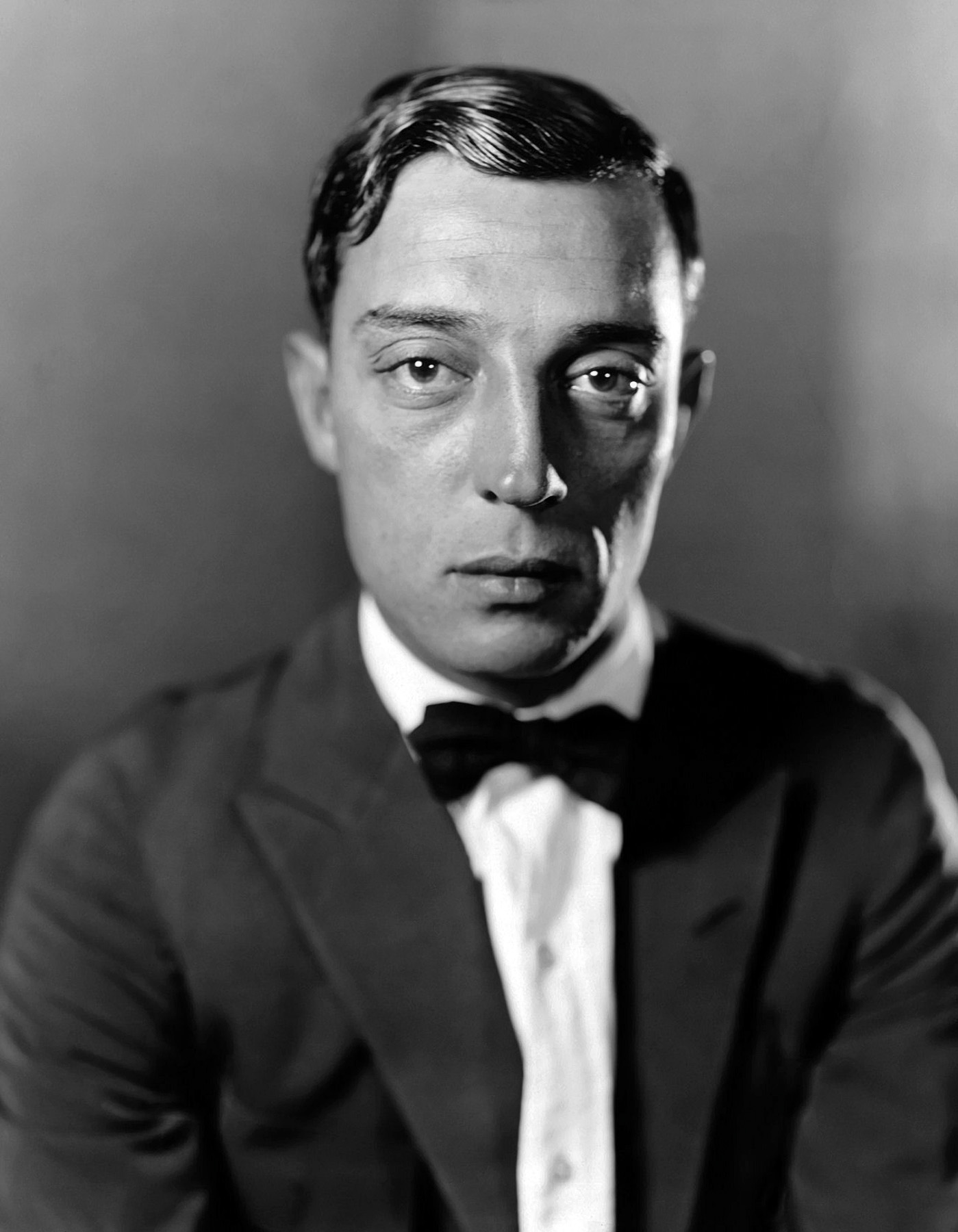
Analysis on Silence: Buster Keaton


Buster Keaton is possibly the most notorious silent comedian, known best for his incredible, life-threatening stunts and being one of the first deadpan film comics (earning him the title of "stone-face"). As a stunt man, having a background in circus acrobatics, he always relied on real danger to make the jokes authentic. His athleticity would always allow him to really chew the scenery, and it was always really funny and well-timed when he would get out of really tight situations very intricately and in a fast paced manner. The level of exagerration in his performance tends to vary, even during his stunts; an example of that is his most famous stunt in Steamboat Bill Jr. in which part of a building collapses around him, with him just standing casually in the spot where a gap would be.

Fun fact: you can actually see his arm getting hit by the window frame.
It's very a iconic stunt for a number of reasons. Firstly, how the shot is composited leads the viewer to think that the wall will land directly onto him, and they expect that to happen because of it. Secondly, the pacing of the shot is done so that the audience feels a very sudden bit of tension to surprise. The wall's slow start up up to its eventual hit to the ground has that very subtle bit of tension that makes final moment that much more surprising. Furthermore, since that's a real wall collapsing, it adds to the authenticity, and the tension more real because of it. The humour part of it comes from the overall surrealism of it, that a seemingly well-constructed house would have a wall that breaks off so neatly like a slice of bread is such a mix of surrealism and misfortune for the lead that it maintains a comedic atomosphere. If the building had collapsed into a pile of bricks behind for instance then it would not have been nearly as humourous, and if it was a fake wall with not as much weight to it then there would be no tension. Most significant of all is Buster Keaton's performance here, which he plays very calmly, not even flinching or showing any kind of concern for what is happening around him (which is very daring even for a professional stuntman), until after he survives his near death experience, where he would then respond to it. Overall, this one moment is a spectacle of a performance, and represents pretty much everything that goes into a Buster Keaton stunt. It looks surreal and plays with our expectations.


It actually parallels this common gag, and many other slapstick moments from Looney Tunes. A combination of surrealism and misfortune that plays with audience's expectations. The audience expects the character to fall off the cliff as soon as they are far off the edge, but instead they hover in the air first and assess the situation only to finally fall to the ground. Much like a Buster Keaton stunt, the gag varies, where sometimes a character will actually manage to save themselves or they'll hold the pose in the air for a longer time. There may not be a direct influence here but the jokes are very similar in nature, and the way Keaton performs his stunts could be seen as just as "toony".

Friday, 16 October 2015

Analysis on Silence: Silent Comedians

The most iconic actors of the silent era are the silent comedians. They are normally the first people anyone thinks of when silent films are brought up, and filmmakers nowadays pay homage to them a lot. They have been a huge influence on comedians and filmmakers throughout the 20th century, and even movies today; the director of Wall-E, showed the staff, during their lunch breaks for a year, every single Buster Keaton and Charlie Chaplin film he could find, no doubt because he wanted the Wall-E character to be influenced by those actors. Jackie Chan is also known for taking inspiration from the likes of Buster Keaton and Harold Lloyd, for their insane stunts. Those are two examples of how these actors have managed to capture the hearts of, and as well as influence many, famous people.

What makes silent comedy so appealing is that back then there were no high brow/low brow comedy films. Chaplin, Keaton, and Lloyd films were all very wacky comedies and their style was very standard back then. You could not make, what top critics would consider, a sophisticated comedy because the humour could only be portrayed by extreme emotions, actions, and situations, so slapstick and random comedy was the best way to portray the comedy genre back then. Sure, you couldn't exactly quote them, since there was no spoken dialogue in those films, but nonetheless the visual style of these films, and the unique acting style of Chaplin, Keaton, and Lloyd, are one of the most iconic and memorable elements of film around.

Thursday, 15 October 2015

Initial Ideas for Dissertation

My dissertation will take a look at the important elements of visual storytelling in animation and how exactly they positively affect cinema. I will research into the exaggerated performance methods of the silent era in relation to the animated films of that era as well, using examples of visually appealing films, like The Cabinet of Dr Caligari, Modern Times, and The General. I’ll also analyse the famous mime artist, Marcel Marceau, whose performances are so absurd and whimsical, while still portraying situations very effectively, that they are very become eye-catching, making him a very influential performer for animators. This will be the beginning of a chapter all about silent animation, which will talk about how silent shorts establish characterisation and narrative, using Koko the Clown, Felix the Cat, and Adventures of Prince Achmed, and other Lotte Reiniger films as examples. This will be difficult, as a lot of the behind-the-scenes material from those days haven’t really been recorded or well-documented, so I’ll have to look at mainly use critical analysis of those films for reference.

For the next chapter, I will research how much performance matters in animation, both by the animators and the voice actors, as well as how characteristics and personalities are defined through character design, using examples such as Looney Tunes, Tom & Jerry, Who Framed Roger Rabbit?, Pixar Shorts, and Cloudy With a Chance of Meatballs 2. Looney Tunes both because of the character animation but also the clever writing and the voice acting of Mel Blanc. Tom and Jerry are examples of taking a natural everyday thing, cats chasing mice, and making them into relatable, fully characterised, and funny shorts, without relying too much on dialogue, but more on the comedic timing. Roger Rabbit is a demonstration of animated acting working well, because the acting of the characters (both the live action and animated ones) is so well done that the audience is engaged with this idea that cartoons are really living in this world, and can even specifically represent typical film noir archetypes, while still maintaining that they are in fact cartoon characters. Luxo Jr works brilliantly well because of the performances of mere objects, the two lamps, establish the two characters and their relationships, all in the way they move. Cloudy With a Chance of Meatballs is an example of a film where the performances of each character are so vibrant and unique to each other, especially the villain, that their personalities can be defined by their performances alone (the same can be said for Inside Out so I could talk about that instead).

I will also talk about cinematography and sound in animation. Betty Boop as an example of silent animation’s transition into the talkie era very smoothly. Tom and Jerry is, again, an example that fits into this dissertation very well in the sense that sound, despite the characters being silent the whole time (apart from a couple well-timed brief dialogues), I might do a case study on Tom and Jerry, but there is still the problem with finding reference material for it, which is strangely hard to come by. Belleville Rendez-vous is an example of a film which tells its story effectively through cinematography, intricate sound design, character design, and of course the acting.